Longevity · Healthspan · Power · Aging
Will You Still Be Able to Do What You Love 10 Years From Now? Strength Training for Longevity
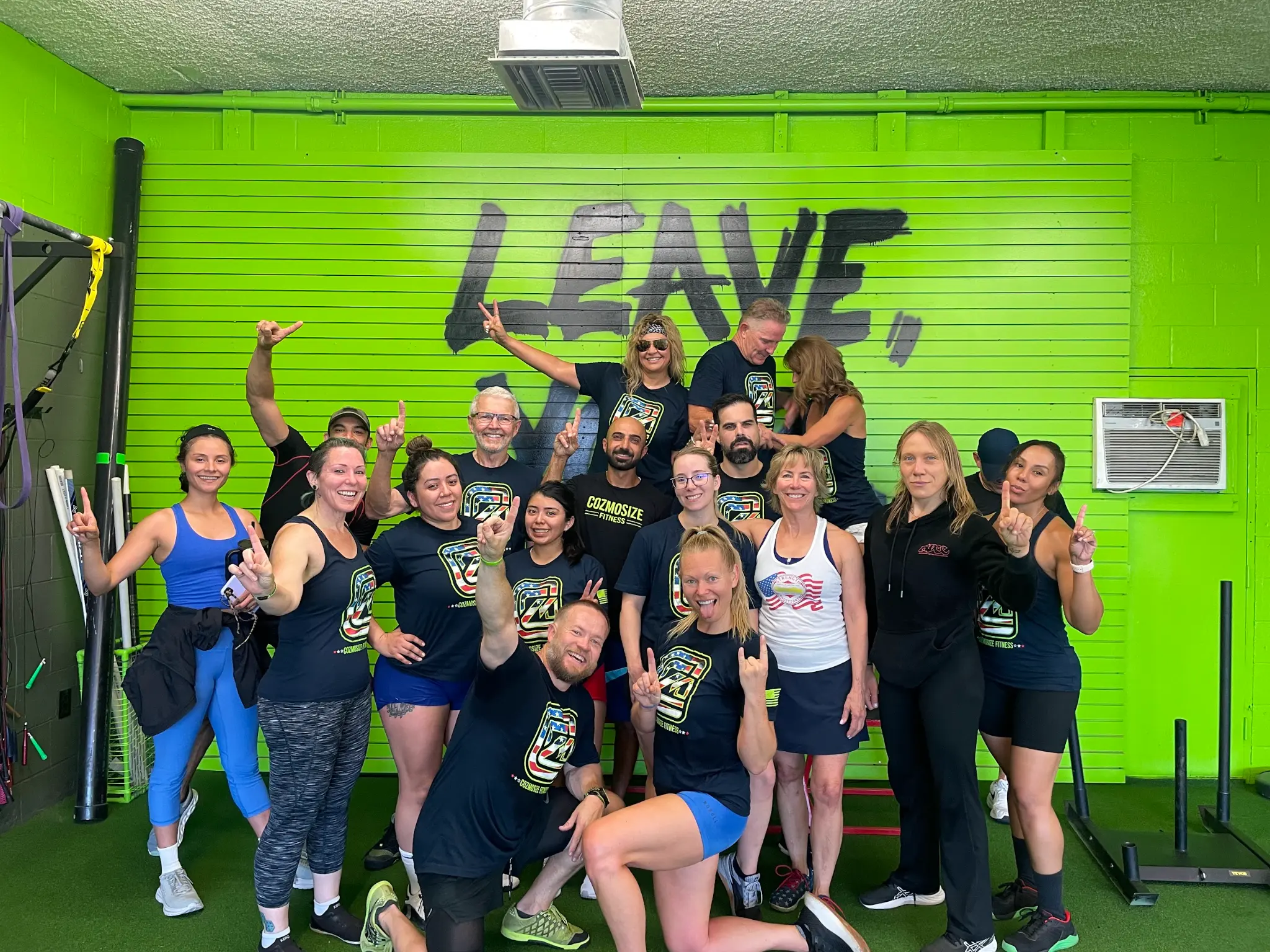
The short answer
Strength training for longevity means building and keeping the muscle, strength, power and mobility you need to stay active and independent as you age. Adults should do muscle-strengthening work for all major muscle groups at least twice a week (CDC); a structured, progressive program that also trains power and covers squatting, hinging, pushing, pulling and carrying does this best.
Key takeaways
- ■The goal is healthspan: years spent capable and independent, not only lifespan.
- ■Strength and power drop faster than muscle size, so train both.
- ■It's never too early or too late to start: 40 is a great time, and so is 70.
- ■Consistency over years beats occasional bursts of hard training.
Think about the things you enjoy doing today.
Maybe it's playing golf on the weekends.
Traveling to new places.
Hiking through the mountains.
Playing with your kids or grandchildren.
Working in the garden, camping, fishing, or spending time outdoors.
Maybe it's something as simple as carrying your own luggage, getting up from the floor, or walking up a flight of stairs without giving it much thought.
Now ask yourself an important question.
Will you still be able to do those things 10 years from now?
What about 20 years from now?
Or 30?
We spend so much time thinking about how we look and feel today that we sometimes overlook what our bodies will need from us in the future.
At CozmoSize Fitness, that's one of the reasons we place such a strong emphasis on strength training for longevity.
Because the goal isn't simply to become stronger in the gym.
It's to develop the physical capacity to keep doing the things that make life enjoyable.
What Does Strength Training for Longevity Actually Mean?
Longevity is often discussed in terms of lifespan: how many years someone lives.
But there's another important concept.
Healthspan.
Healthspan refers to the years of life spent in good health, with the ability to function and participate in meaningful activities.
Living longer is valuable.
But most of us also want to remain active, capable, and independent during those additional years.
This is where strength training becomes important.
Resistance training helps maintain and develop skeletal muscle, muscular strength, and other physical qualities that contribute to everyday function.
It's not a guarantee against illness, disability, or age-related changes.
But it is one of the tools we can use to help preserve physical capacity as we get older.
The goal isn't just to add years to your life. It's to support your ability to enjoy those years.
The Physical Demands of Everyday Life
Here's something worth considering.
Many of the activities we enjoy require strength, whether we recognize it or not.
Walking through an airport with luggage requires muscular endurance and the ability to carry weight.
Golf requires coordination, rotational movement, balance, and the ability to produce force.
Hiking requires lower-body strength, stability, and cardiovascular endurance.
Playing with grandchildren may involve getting down to the floor, lifting, carrying, and standing back up.
Even everyday activities such as unloading groceries or climbing stairs require muscles to produce force.
We don't necessarily think of these activities as exercise.
They're simply part of living.
But they all place demands on the body.
And the better prepared we are for those demands, the more comfortably and confidently we may be able to participate.
Strength training isn't just preparation for the next workout. It's preparation for life outside the gym.
What Happens to Muscle and Strength as We Age?
As we get older, several changes can influence our physical capabilities.
One of the most significant is the gradual loss of skeletal muscle and strength associated with aging.
Age-related muscle loss can begin in early adulthood, although the rate varies considerably between individuals.
Losses often become more pronounced later in life, particularly with inactivity, inadequate nutrition, illness, or other health challenges.
And muscle mass is only part of the picture.
Muscular strength and power may decline more rapidly than muscle size.
This matters because our ability to perform daily activities depends on more than how much muscle we have.
We also need to produce force, control movement, maintain balance, and respond to physical challenges.
A person can maintain a relatively stable body weight while experiencing changes in muscle mass or physical performance.
That's one reason the number on the scale doesn't tell the entire story.
Our ability to function is influenced by the physical capacity we maintain—not simply our body weight or appearance.
The encouraging part?
We can continue improving strength and physical performance well into older adulthood.
Age changes how we approach training, but it doesn't eliminate our ability to benefit from it.
Strength Is More Than How Much You Can Lift
When people hear the word strength, they often picture someone lifting a heavy barbell.
And while lifting heavier weights can be a valuable part of resistance training, strength has a much broader purpose.
Think about carrying a 40-pound suitcase.
Getting up from a low chair.
Lifting a grandchild.
Moving something around the house.
Or maintaining control while walking downhill on uneven terrain.
These activities require physical qualities that we can develop through appropriate training.
And not everyone needs to lift the same weights or perform the same exercises to improve those capabilities.
At CozmoSize, we believe the training prescription should reflect the individual.
What matters isn't whether everyone can lift the same amount. It's whether they're developing the capacity to meet the physical demands of their lives.
Why Power Matters as We Get Older
Strength is important.
But strength alone isn't the entire picture.
There's another physical quality that deserves attention as we age.
Power.
Muscular power describes the ability to produce force quickly.
Think about the difference between slowly standing up from a chair and quickly stepping to regain your balance after tripping.
Both require muscular force.
But the second situation demands that the body react rapidly.
The ability to produce and absorb force quickly can matter when navigating stairs, stepping over obstacles, or responding to unexpected movements.
Research has shown that muscular power can decline considerably with aging and is associated with physical performance.
This is why power development is incorporated into every CozmoSize strength-training session as part of our Longevity Strength System.
We believe training power deserves consistent attention alongside traditional strength development, rather than being treated as something reserved for athletes.
That doesn't mean everyone needs to jump onto a high box or perform explosive movements with heavy weights.
Power training can be adapted to someone's experience and physical capabilities.
We want members developing the ability to produce force—not just slowly, but quickly when life requires it.
Mobility: Having Strength Is Important, but So Is Being Able to Use It
Imagine having the strength to lift an object but struggling to reach the position needed to pick it up.
Or having strong legs but limited movement options when getting down to the ground.
Strength is important, but it works alongside mobility.
Mobility generally refers to the ability to actively move through an appropriate range of motion with control.
It's influenced by several factors, including available joint motion, strength, and coordination.
Maintaining useful mobility helps us perform exercises and daily activities across the ranges of motion they require.
That's why our approach to longevity isn't limited to lifting weights.
We also incorporate mobility and movement preparation into our training system.
Being strong is valuable. Being able to use that strength through the movements life requires is even better.
Independence Is One of the Most Important Long-Term Goals
When you're 40 or 50, it's easy to think of independence as something you won't need to worry about until much later.
But consider what independence means in practical terms.
Being able to get yourself out of a chair.
Carry your groceries.
Walk through a parking lot.
Climb stairs.
Travel.
Participate in family activities.
Continue enjoying your hobbies.
These are examples of physical independence.
They may seem ordinary today because you can perform them without much difficulty.
But they're worth protecting.
The Centers for Disease Control and Prevention recognizes that regular physical activity can help older adults maintain independence and quality of life.
Its guidelines recommend muscle-strengthening activities at least two days per week, along with aerobic activity and, for older adults, balance training.
Those recommendations reflect an important principle:
Maintaining physical function requires continued physical activity, not simply avoiding inactivity when we're younger.
You Don't Have to Wait Until You're Older to Start Thinking About Longevity
One of the biggest misconceptions about longevity-focused training is that it's only relevant for people in their 60s, 70s, or 80s.
But what we do in our 30s, 40s, and 50s can help establish the physical foundation we carry into later life.
Building strength now gives us an opportunity to develop our capabilities before age-related declines become more pronounced.
And if you're already older?
It's not too late to begin.
Many previously inactive older adults can improve strength and functional performance through appropriately designed resistance training.
The starting point may differ.
The exercises may need to be modified.
Progression may be more gradual.
But the opportunity to improve remains.
The best time to begin investing in your physical capabilities isn't determined by a particular birthday.
It's determined by your willingness and ability to begin.
Why a Structured Training System Matters
If the goal is to maintain physical function for decades, our training needs to be more than a random collection of workouts.
We need a plan.
At CozmoSize Fitness, our Longevity Strength System (LSS) is built around structured, progressive resistance training.
We focus on developing important physical qualities through individualized programming.
That includes:
Muscular Strength: Developing the ability to produce force against resistance.
Muscle Development: Supporting the maintenance and growth of skeletal muscle.
Power: Training the ability to produce force quickly.
Mobility: Maintaining and developing useful ranges of motion with control.
Core Stability: Improving the ability to control the trunk and transfer force during movement.
Movement Coverage: Training fundamental patterns including squatting, hinging, pushing, pulling, and carrying, with appropriate bilateral and unilateral exercise variations.
Progression: Adjusting the training stimulus over time as capabilities develop.
The exact exercises and loads may differ between individuals.
But the underlying goal remains the same.
Build and maintain the physical capacity to support an active life.
That's why we don't just focus on whether someone had a difficult workout.
We focus on whether their training is moving them toward meaningful long-term improvements.
The Importance of Consistency Over Time
Here's something I remind people of frequently.
You don't become stronger from one great workout.
You develop strength through repeated, appropriately challenging training sessions over time.
And the same principle applies to longevity.
It's not about having a perfect week.
It's about developing habits you can maintain for years.
Some weeks you'll train more frequently.
Other weeks life will get in the way.
Travel, work, family commitments, and unexpected circumstances are part of being human.
The goal is to keep returning to the process.
A training program that works only when life is perfect isn't necessarily a program that supports long-term consistency.
Consistency over time is far more valuable than occasional bursts of intensity followed by long periods of inactivity.
What Should Strength Training for Longevity Include?
A useful longevity-focused training program should address more than a single muscle group or fitness quality.
For most generally healthy adults, important components include:
- Progressive resistance training to develop and maintain muscular strength.
- Appropriate movement coverage across major muscle groups and fundamental movement patterns.
- Power training, when appropriate, to develop the ability to produce force quickly.
- Mobility and balance activities to support movement control and everyday physical demands.
- Aerobic activity to support cardiovascular fitness and endurance.
- Recovery and adequate nutrition to support adaptation and continued participation.
The CDC recommends that adults perform muscle-strengthening activities at least two days per week. Adults 65 and older are also encouraged to incorporate balance activities.
These are minimum public-health recommendations, not necessarily the optimal training frequency for every individual.
Depending on someone's goals, training experience, recovery, and schedule, additional resistance-training sessions may be appropriate.
The most effective training plan isn't necessarily the one with the most sessions. It's the one that appropriately balances training stimulus, recovery, and consistency.
At CozmoSize, that's why we place so much importance on individualized exercise prescription within a structured system.
Frequently Asked Questions About Strength Training and Longevity
What is strength training for longevity?
Strength training for longevity focuses on developing and maintaining muscle, strength, power, and other physical qualities that help people remain active and capable as they age.
Can strength training help you stay independent as you age?
Resistance training can improve muscle strength and physical performance, which are important contributors to everyday function. Combined with other physical activities, it can help support independence as people grow older.
Is 40 too early to start training for longevity?
Not at all. Maintaining muscle, strength, and physical activity throughout adulthood can help establish a foundation for later-life health and physical function.
Is it too late to start strength training after 60 or 70?
No. Many older adults can improve strength and physical function through appropriately prescribed resistance training. Exercises should be selected and progressed according to individual capabilities and health considerations.
How often should adults over 40 strength train?
General physical activity guidelines recommend muscle-strengthening activities at least two days per week as a minimum. The ideal frequency for a particular person depends on their experience, goals, recovery, and schedule.
Is walking enough to maintain muscle as you age?
Walking is valuable for cardiovascular health, mobility, and general activity, but it may not provide enough resistance to preserve or develop all the muscular qualities targeted by strength training. Both forms of activity can play important roles.
What's the difference between strength and power?
Strength is the ability to produce force. Power involves producing force quickly. Both contribute to physical performance, and both can be developed through appropriate training.
Do you need to lift heavy weights to benefit from resistance training?
Not necessarily. A range of resistance levels can be effective when exercises are appropriately challenging and progressively prescribed. The best approach depends on the individual and the intended outcome.
The Bottom Line: Train for the Life You Want to Keep Living
Think again about that original question.
Will you still be able to do what you love 10 years from now?
Nobody can predict exactly what the future holds.
But we can take meaningful steps today to prepare our bodies for it.
We can develop strength.
Maintain muscle.
Improve mobility.
Train power.
Build cardiovascular fitness.
And most importantly, create habits that help us remain physically active throughout life.
At CozmoSize Fitness, we don't view strength training as something that begins and ends inside the gym.
We view it as an investment in the life someone wants to continue living.
Because someday, the most important thing about your training might not be how much you can lift.
It might be that you can still travel wherever you want.
Play with your grandchildren.
Spend the day on the golf course.
Enjoy your favorite hobbies.
Or simply handle everyday activities independently.
DON'T JUST TRAIN FOR TODAY.
TRAIN FOR THE LIFE YOU WANT TO LIVE 10, 20, AND 30 YEARS FROM NOW.
Research & Further Reading
- CDC — Physical Activity Guidelines for Older Adults
- CDC — Physical Activity Guidelines for Adults
- Physical Activity Guidelines for Americans, 2nd Edition
- CozmoSize Fitness — Longevity Strength System
This article provides general exercise education. Training recommendations should be adapted to individual capabilities, health status, and medical guidance when appropriate.