Women over 40 · Menopause · Bone density · Muscle
Why Women Over 40 Need Strength Training: Muscle, Menopause, and Longevity

The short answer
Women over 40 benefit from strength training because muscle, strength and bone density decline with age, and menopause speeds up some of those changes. Progressive resistance training two or more days a week helps women keep and build muscle, support bone health and stay independent, and it does not make women bulky.
Key takeaways
- ■Muscle loss starts before menopause; women can keep building muscle and strength well past 40.
- ■Strength training supports muscle, bone density and metabolic health through menopause.
- ■Focus on body composition and what you can do, not only the number on the scale.
- ■Train at least twice a week on a planned, progressive program; protein and recovery matter too.
For years, much of the fitness industry has encouraged women to focus on burning calories, losing weight, and getting smaller.
More cardio.
More sweat.
Fewer calories.
But there's something that deserves far more attention, particularly as women enter their 40s, 50s, and beyond.
GETTING STRONGER.
As women age, maintaining muscle, strength, bone health, and physical independence becomes increasingly important.
And while weight management may be one goal, it shouldn't be the only one.
At CozmoSize Fitness, we believe resistance training is one of the most valuable investments women can make in their long-term health.
Not simply because it can change how their bodies look.
But because it can change what their bodies are capable of doing.
The goal isn't just to become smaller. It's to become stronger, more capable, and better prepared for the decades ahead.
What Happens to a Woman's Body After 40?
Turning 40 doesn't suddenly change everything.
But throughout midlife, women may experience a combination of age-related and hormonal changes that influence their body composition, physical performance, and long-term health.
These changes can include gradual muscle loss, changes in body fat distribution, declining bone mineral density, and changes in sleep and recovery.
For many women, these years also include perimenopause and menopause.
Not every woman experiences these changes at the same age or to the same degree. Genetics, activity levels, nutrition, health conditions, and hormonal factors all influence the process.
But one thing is clear.
Maintaining muscle and strength becomes increasingly valuable as we age.
And resistance training gives women a practical way to invest in both.
1. Muscle Loss Doesn't Start at Menopause
One of the biggest misconceptions about age-related muscle loss is that it begins when someone reaches menopause.
In reality, changes in skeletal muscle can begin much earlier in adulthood.
Without sufficient physical activity, muscle mass and strength tend to decline gradually with age. These changes often become more pronounced later in life.
Why does this matter?
Because skeletal muscle supports far more than appearance.
It's involved in walking, climbing stairs, lifting objects, carrying groceries, maintaining posture, and participating in recreational activities.
As muscle strength declines, activities that once felt easy may become more physically demanding.
But here's the encouraging part.
Women can continue building muscle and improving strength well beyond their 40s.
Progressive resistance training challenges muscles to adapt to increasing demands.
That ability doesn't disappear at menopause.
And women don't have to wait until they're experiencing muscle loss to begin training.
Building and maintaining strength throughout adulthood gives us a foundation to carry into later life.
2. Menopause: Why Strength Training Becomes Even More Important
Menopause is a normal biological transition, typically occurring between ages 45 and 55, although timing varies.
Perimenopause is the transitional period leading up to menopause, during which hormone levels fluctuate.
These changes can affect sleep, energy levels, body composition, and other aspects of health.
One particularly important change is declining estrogen, which is associated with accelerated bone loss around menopause.
Women may also notice changes in where their bodies store fat, as well as challenges maintaining muscle and strength.
But while we can't stop the natural hormonal changes associated with menopause, we can take meaningful steps to maintain and improve our physical capabilities.
Resistance training is one of those steps.
How Strength Training Helps During Menopause
Preserving and Building Muscle
Progressive resistance training helps women maintain and develop muscle, even during and after the menopause transition.
This matters because preserving muscle supports physical function, strength, and long-term independence.
Supporting Bone Density
Bones respond to mechanical loading.
When we challenge the body through appropriately prescribed resistance training, muscles generate forces that stimulate the skeletal system.
Research suggests that resistance training can help maintain or improve bone mineral density in postmenopausal women, although results depend on training intensity, exercise selection, duration, and individual characteristics.
This is particularly relevant because women face an increased risk of osteoporosis as they age.
Improving Metabolic Health
Skeletal muscle plays an important role in glucose regulation.
Resistance training can improve insulin sensitivity and support the body's ability to manage blood sugar.
This becomes valuable during midlife, when changes in body composition may also influence metabolic health.
Maintaining Strength and Physical Capability
Becoming stronger helps women continue performing activities that matter to them, from lifting luggage and carrying groceries to traveling and enjoying recreational activities.
And these benefits aren't limited to women who were already athletic or experienced with weights.
Women can begin resistance training during or after menopause and still make meaningful improvements.
Strength training isn't a replacement for medical care or a guaranteed treatment for menopausal symptoms such as hot flashes.
But it's an effective way to address several physical challenges that may accompany this stage of life.
Menopause may change how a woman's body responds to aging, but it doesn't take away her ability to become stronger.
3. Weight Loss vs. Body Composition: Why the Scale Doesn't Tell the Whole Story
Here's a distinction I believe more women should understand.
Losing weight isn't necessarily the same as improving body composition.
Your total body weight includes muscle, fat, bone, water, and other tissues.
When someone loses weight, that loss may include both body fat and lean tissue.
This becomes especially important for women over 40, when preserving muscle deserves greater attention.
If the only goal is to make the number on the scale smaller, we may overlook changes in muscle mass and physical performance.
Our goal should be to reduce unnecessary body fat while maintaining as much valuable muscle and strength as possible.
That's one reason resistance training is so important during weight loss.
It provides a stimulus that encourages the body to maintain muscle while overall body weight decreases.
Adequate protein intake and appropriate nutrition also play important roles.
At CozmoSize Fitness, we use body composition assessments to help members look beyond scale weight.
These assessments provide estimates of fat mass and lean mass, which can offer useful context alongside strength measurements and other indicators of progress.
They're not perfectly precise, but they can help shift the conversation toward what matters.
A lighter body isn't automatically a stronger or healthier body.
Why Muscle Matters for Metabolism
Muscle also plays an important role in metabolic health.
Skeletal muscle is a major site of glucose uptake, and regular resistance training can improve insulin sensitivity.
But it's worth clearing up a common misconception.
Building muscle doesn't automatically create a dramatic increase in resting metabolism.
Muscle tissue requires energy, but the additional calories burned from modest increases in muscle mass are often exaggerated.
The metabolic benefits of resistance training extend beyond resting calorie expenditure.
It's about supporting the body's ability to regulate blood sugar, maintain physical capacity, and function effectively.
And those benefits matter whether the scale moves or not.
4. Strength, Power, and Independence: Training for Life Outside the Gym
When most people think about strength training, they picture lifting weights.
But what we're really developing is the ability to produce force.
And that ability carries over into everyday life.
Think about standing up from a low chair.
Lifting a grandchild.
Carrying groceries.
Or moving something around the house.
These activities require strength.
But there's another physical quality that deserves attention as we age.
Power.
Muscular power involves producing force quickly.
Think about the difference between slowly standing up from a chair and quickly stepping to regain your balance after tripping.
Both require muscular force.
But the second demands a rapid physical response.
Research suggests that muscular power can decline more rapidly than muscle mass with aging.
And that matters because producing and absorbing force quickly can be valuable when navigating stairs, stepping over obstacles, or responding to unexpected movements.
Why We Train Power at CozmoSize
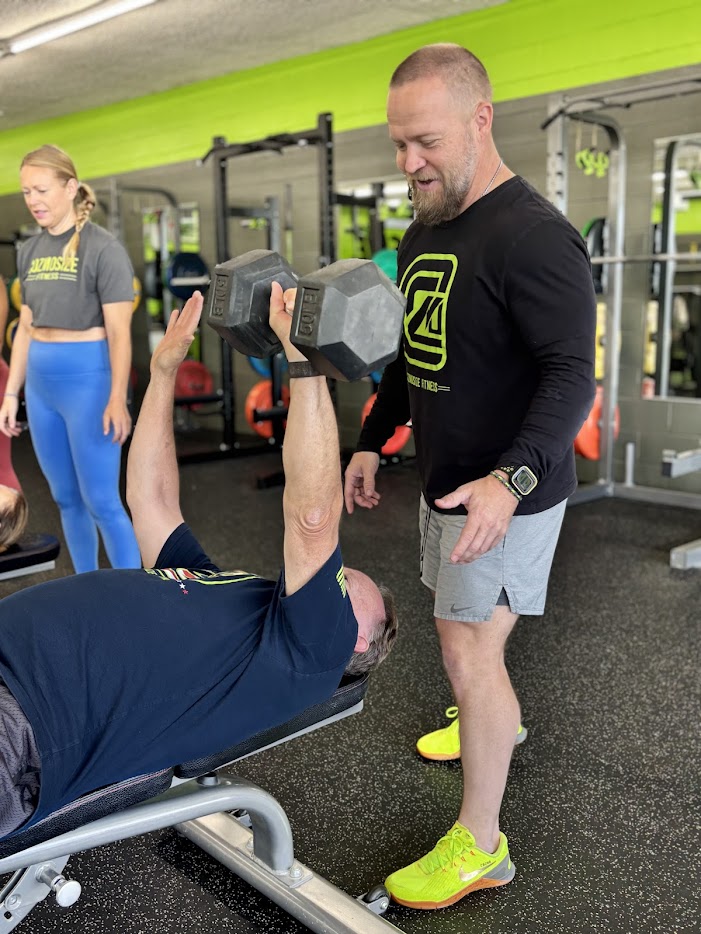
Our Longevity Strength System incorporates appropriate power development into every strength-training session.
That doesn't mean everyone needs to jump onto high boxes or perform demanding explosive exercises.
Power training can be individualized based on someone's experience, abilities, and readiness.
The objective is to help members develop the ability to produce force quickly, not simply lift heavier weights.
We want women to develop strength and power because both contribute to physical capability.
And ultimately, physical capability supports independence.
Being able to travel.
Play with grandchildren.
Go hiking.
Enjoy hobbies.
Get down on the floor and stand back up.
Continue doing the activities that make life enjoyable.
These things may seem ordinary today, but they're worth protecting for the years ahead.
Strength isn't just about what you can lift in the gym. It's about what you can continue doing outside of it.
5. Will Lifting Weights Make Women Bulky?
This question has influenced women's exercise choices for decades.
And it deserves a straightforward answer.
Resistance training doesn't automatically make someone bulky.
Developing substantial muscle size requires consistent training, appropriate nutrition, time, genetics, and other biological factors.
Women absolutely can build meaningful amounts of muscle through resistance training.
And that's a positive thing.
But significant muscle development doesn't happen accidentally after a few weeks of lifting weights.
Some women want more visible muscular development.
Others primarily want improved strength, better movement, or changes in body composition.
Both are valid goals.
And training can be adjusted to reflect those goals.
Muscle is an asset worth building and maintaining—not something women should automatically be afraid of developing.
6. How Often Should Women Over 40 Strength Train?
The CDC recommends muscle-strengthening activities at least two days per week for adults.
That's a minimum public-health recommendation, not necessarily the ideal training frequency for every woman.
But rather than focusing solely on how many days someone trains, we should also consider what's actually being accomplished during those sessions.
A well-structured program should provide appropriate training volume, progressive resistance, and coverage of essential movement patterns.
At CozmoSize Fitness, we account for training frequency when organizing exercise selection, movement coverage, and training volume.
Someone attending twice weekly may follow a different distribution of exercises than someone training four days per week.
Both can make meaningful progress when their training is appropriately programmed.
The number of sessions matters, but it doesn't tell the entire story.
It's not just how often you train. It's how effectively those sessions are programmed.
7. Protein, Recovery, and Consistency
Resistance training provides the stimulus for muscular adaptation.
But nutrition and recovery help support that process.
Adequate dietary protein is particularly important for maintaining and developing muscle.
Research supports approximately 0.6–0.9 grams of protein per pound of body weight daily for many healthy adults who regularly strength train.
At CozmoSize Fitness, we often encourage suitable members to work toward 1 gram of protein per pound of body weight as a simple, aspirational coaching goal.
That doesn't mean every woman needs to reach that exact number to build muscle.
And falling short on a particular day doesn't mean failure.
The goal is consistency, not perfection.
Individuals with substantial excess body weight or certain medical conditions may need personalized targets rather than automatically using current body weight.
Adequate sleep, balanced nutrition, and sufficient recovery also contribute to productive training.
And when it comes to long-term results, consistency is essential.
One great workout won't transform someone's strength or muscle mass.
But regularly challenging the body through a well-designed program can create meaningful improvements over time.
At CozmoSize, our Longevity Strength System uses structured, progressive training that incorporates fundamental movement patterns, individualized exercise prescription, mobility, stability, strength, and power.
The purpose isn't to make every session exhausting.
It's to develop physical capabilities that can continue improving over time.
Frequently Asked Questions About Strength Training for Women Over 40
Is strength training good for women over 40?
Yes. Resistance training can improve muscular strength, support muscle development, and contribute to better physical function, metabolic health, and long-term independence.
Does strength training help during menopause?
Yes. Resistance training can support muscle maintenance, strength, bone health, and metabolic function during and after menopause. However, it isn't a guaranteed treatment for symptoms such as hot flashes or sleep disturbances.
Can women build muscle after menopause?
Absolutely. Women can improve strength and often increase muscle size after menopause through appropriately designed resistance training.
Can lifting weights help prevent osteoporosis?
Resistance training can help maintain or improve bone mineral density and is an important component of bone-health management. It cannot guarantee the prevention of osteoporosis or fractures.
Will lifting weights make women bulky?
No, lifting weights doesn't automatically make women bulky. Significant muscle development takes consistent training, appropriate nutrition, and time. Resistance training can be individualized to help women build strength, maintain muscle, and achieve their personal goals without necessarily pursuing substantial muscle size.
How often should women over 40 strength train?
The general minimum public-health recommendation is at least two days per week. But rather than focusing solely on the number of sessions, consider what's actually being accomplished during those sessions.
A well-structured program should provide appropriate training volume, progressive resistance, and coverage of essential movement patterns.
Someone training twice a week can make meaningful progress, just as someone training four times per week can. The exercises, volume, and overall programming should be organized around the individual's schedule and goals.
It's not just how often you train. It's how effectively those sessions are programmed.
Is walking enough exercise for women over 40?
Walking is excellent for cardiovascular health, daily activity, and overall well-being. But walking alone generally doesn't provide enough resistance to meaningfully build or maintain muscle throughout the body.
Walking helps you stay active. Resistance training provides the progressive stimulus needed to build muscle and develop strength.
Both are important, but they serve different purposes. For women over 40, combining regular walking with structured resistance training is a more comprehensive approach to maintaining long-term health and physical function.
Is it safe to begin strength training after 50 or 60?
Yes. Women can begin strength training in their 50s, 60s, and beyond—and still make meaningful improvements in muscle, strength, and physical performance.
The key is selecting appropriate exercises, establishing suitable starting loads, and progressing based on individual capabilities.
Women with osteoporosis, recent fractures, or certain medical conditions may need additional guidance from qualified healthcare professionals.
It's never too late to begin developing strength.
Is cardio or strength training more important for women over 40?
Both are important, but they serve different purposes.
Cardiovascular exercise helps develop aerobic fitness, endurance, and cardiovascular health.
Resistance training provides the stimulus needed to build and maintain muscle, develop strength, and support bone health.
Rather than choosing one over the other, women should incorporate both into a comprehensive exercise program.
Strength training builds your physical capacity. Cardiovascular training develops your engine. Together, they support an active, healthy life.
The Bottom Line: Women Over 40 Need More Than Calorie-Burning Workouts
For too long, women's fitness has been framed around losing weight, burning calories, and becoming smaller.
But as women move through their 40s, 50s, 60s, and beyond, the conversation should become much bigger.
It's about maintaining muscle.
Supporting bone health.
Developing strength and power.
Improving metabolic health.
And preserving the physical capabilities that make an active, independent life possible.
At CozmoSize Fitness, we believe women deserve a training approach that prioritizes long-term strength and function.
Because the goal isn't simply to change how your body looks today.
It's to help build a body capable of doing what you love for years to come.
DON'T JUST FOCUS ON GETTING SMALLER.
FOCUS ON GETTING STRONGER.
Research & Further Reading
- Resistance Training and Women's Strength Across the Lifespan — Systematic Review and Meta-Analysis (2026)
- Resistance Training and Bone Mineral Density in Postmenopausal Women — Meta-Analysis (2025)
- Exercise During Perimenopause and Early Postmenopause — Systematic Review (2025)
- Resistance Training Effects on Healthy Postmenopausal Women — Systematic Review (2024)
- CDC — Physical Activity Guidelines for Older Adults
- CozmoSize Fitness — Longevity Strength System
This article provides general fitness education and is not a substitute for individualized medical advice. Exercise and nutritional recommendations should account for personal health conditions, including osteoporosis and other conditions requiring specialized guidance.