Nutrition · Protein · Muscle after 40
Protein After 40: How Much Do You Really Need to Maintain Muscle and Strength?

The short answer
For healthy adults who strength train regularly, research supports about 0.6–0.9 grams of protein per pound of body weight per day; older adults (65+) should get at least about 0.45–0.55 g per pound. At CozmoSize Fitness, suitable members aim for 1 gram per pound as a simple goal, spread across meals of about 25–40 grams.
Key takeaways
- ■The RDA (about 0.36 g per lb) covers basic needs, not muscle building for people who lift.
- ■Benefits tend to level off around 0.73 g per lb on average (Morton et al., 2018).
- ■Total daily protein matters more than a narrow post-workout window.
- ■Protein supports muscle; resistance training is what gives the body a reason to keep it.
When people think about nutrition, the conversation often revolves around calories, carbohydrates, fats, and losing weight.
But there's one nutrient that deserves considerably more attention, especially as we get older.
PROTEIN.
Protein isn't just for bodybuilders or professional athletes. It's essential for maintaining muscle, supporting recovery, and helping our bodies remain strong and capable throughout life.
And as we age, getting enough protein becomes increasingly important.
So how much do you actually need?
For many healthy adults who regularly strength train, research supports approximately 0.6–0.9 grams of protein per pound of body weight daily. At CozmoSize Fitness, we often encourage suitable members to aim for 1 gram per pound as a simple coaching goal—not a requirement they must meet every day.
But there's more to the story than simply hitting a number.
Let's break it down.
Why Does Protein Become More Important After 40?
Beginning in early adulthood, our bodies gradually undergo changes that can influence muscle mass, strength, and recovery.
One of these changes is age-related muscle loss, often referred to as sarcopenia when it becomes clinically significant.
Muscle mass can gradually decline beginning in our 30s, with losses often accelerating later in life.
But it's not just muscle size that matters.
Muscular strength and power can decline faster than muscle mass itself, potentially affecting our ability to perform everyday activities.
Walking up stairs, carrying groceries, traveling, gardening, playing with grandchildren, or simply getting up from the floor all require physical capacity.
Maintaining skeletal muscle is an important part of preserving that capacity.
And protein plays a significant role in the process.
What Does Protein Actually Do for Your Muscles?
Your muscles are constantly undergoing repair and remodeling.
Two processes help regulate changes in muscle tissue:
Muscle Protein Synthesis (MPS): The process of building new muscle proteins.
Muscle Protein Breakdown (MPB): The process of breaking down existing muscle proteins.
Both processes occur naturally throughout the day.
When muscle protein synthesis exceeds breakdown over time, the conditions are favorable for muscle growth.
When breakdown consistently exceeds synthesis, muscle tissue can be lost.
Resistance training stimulates muscle protein synthesis, and consuming adequate dietary protein provides the amino acids needed to support the process.
Think of resistance training as the stimulus and protein as part of the raw material needed to respond to it.
Both matter.
What Is Anabolic Resistance?
Here's something many people don't realize.
As we age, our muscles may become less responsive to some of the signals that normally stimulate muscle protein synthesis.
Researchers refer to this as anabolic resistance.
In simple terms, older muscle may require a stronger stimulus from resistance training, adequate protein intake, or both to achieve a comparable muscle-building response.
This doesn't mean you stop being able to build muscle after 40, 50, 60, or even 70.
Far from it.
It means that nutrition and structured resistance training become particularly valuable.
And while we often discuss these changes beginning in midlife, the strongest evidence for age-related anabolic resistance comes from studies involving older adults.
How Much Protein Do You Actually Need?
Let's look at the science first.
The traditional adult Recommended Dietary Allowance (RDA) is approximately 0.36 grams of protein per pound of body weight daily.
However, that amount is intended to meet the basic protein needs of most healthy adults, not necessarily to optimize muscle development in people who regularly strength train.
The International Society of Sports Nutrition recommends approximately 0.6–0.9 grams per pound daily for most healthy, exercising individuals.
Research involving older adults also supports paying attention to adequate protein intake.
The PROT-AGE Study Group recommended approximately 0.45–0.55 grams per pound daily for healthy adults over 65, with at least approximately 0.55 grams per pound suggested for many physically active older adults.
These recommendations apply to different populations and goals.
The CozmoSize Approach: Aim for 1 Gram per Pound
At CozmoSize Fitness, we like giving our members a simple, memorable goal to work toward:
AIM FOR 1 GRAM OF PROTEIN PER POUND OF BODY WEIGHT EACH DAY.
If you weigh 150 pounds, that's a goal of 150 grams of protein.
If you weigh 180 pounds, that's 180 grams.
If you weigh 200 pounds, that's 200 grams.
But here's something equally important.
Does that mean you absolutely need to hit that number every single day? Of course not.
We consider it a great day when you hit your target.
Some days you'll come close. Other days you might fall short.
And that's okay.
Just like strength training, nutrition is about developing consistent habits rather than chasing perfection.
We want members working toward their protein goals consistently, not feeling like they've failed when they don't reach them.
For certain individuals, particularly those with substantial excess body weight or medical conditions requiring dietary modifications, we may recommend seeking individualized guidance rather than automatically using current body weight to determine a target.
Our coaching goal is a practical tool, not a universal medical prescription.
What Does That Look Like in Real Life?
Here's our commonly used coaching target for suitable members:
| Body Weight | CozmoSize Daily Protein Goal |
|---|---|
| 120 lbs | 120 grams |
| 140 lbs | 140 grams |
| 160 lbs | 160 grams |
| 180 lbs | 180 grams |
| 200 lbs | 200 grams |
| 220 lbs | 220 grams |
Remember: This is a goal to work toward, not a minimum you must achieve to make progress.
Even if you don't reach your target perfectly every day, consistently improving your protein intake can be beneficial.
Is More Protein Always Better?
Not necessarily.
A major 2018 meta-analysis examining resistance training and protein supplementation found that improvements in muscle-related outcomes tended to level off around 0.73 grams per pound of body weight daily, on average.
That doesn't mean every person has the exact same requirement.
And it doesn't mean consuming more protein is automatically harmful.
It means that beyond a certain point, additional protein may provide diminishing returns for muscle development.
So why does CozmoSize use a 1-gram-per-pound goal?
Because it's straightforward, easy to remember, and gives suitable members a practical target to work toward while prioritizing muscle preservation and strength training.
We're not suggesting everyone needs 1 gram per pound to build muscle.
We're encouraging a consistent nutritional habit that supports a strength-focused lifestyle.
For some members, lower targets will be more appropriate.
Does Protein Timing Matter?
You've probably heard that you need a protein shake immediately after training or you'll miss your opportunity to build muscle.
Fortunately, it's not quite that complicated.
While protein intake around exercise can support recovery and muscle protein synthesis, your total daily protein intake is generally the first priority.
Protein distribution may also be helpful.
Instead of eating very little protein throughout the day and consuming most of it at dinner, consider including meaningful protein portions across your meals.
For many adults, approximately 25–40 grams of protein per meal is a practical starting point, although individual needs vary.
People aiming for higher daily totals may need larger portions or additional protein-rich snacks.
What About Intermittent Fasting?
Intermittent fasting can fit into a strength-training lifestyle, provided you're meeting your nutritional needs.
However, shorter eating windows may make it harder to consume enough protein.
For example, a member aiming for 150 grams of protein who eats within a six-hour window might need two substantial protein-rich meals and an additional shake or snack.
The goal isn't to force a particular eating schedule.
It's to develop a schedule that supports your nutrition, training, recovery, and lifestyle.
What Are Some Good Sources of Protein?
You don't need to rely on supplements to reach your protein goals.
Many everyday foods provide excellent protein sources.
| Food | Approximate Protein |
|---|---|
| Chicken breast, 3 oz cooked | 26 g |
| Salmon, 3 oz cooked | 19–22 g |
| Two large eggs | 12–13 g |
| Plain Greek yogurt, 1 cup | 20–25 g |
| Cottage cheese, 1 cup | 24–26 g |
| Firm tofu, ½ cup | 10–22 g, depending on product |
| Cooked lentils, 1 cup | 18 g |
| Whey protein, one typical serving | 20–25 g |
Actual protein content varies by product, serving size, and preparation.
Both animal-based and plant-based protein sources can help meet daily requirements.
The key is choosing foods you enjoy and can eat consistently.
Do You Need Protein Supplements?
No.
Protein powder is a convenience, not a requirement.
If you can consistently reach an appropriate protein target through your meals, you may not need a supplement.
However, protein supplements can be useful when:
- Your schedule makes meal preparation challenging.
- You struggle to consume enough protein through whole foods.
- You have limited appetite.
- You need something convenient after training.
- You're trying to reach a higher daily protein goal.
The important thing is your overall nutrition.
A protein shake can help fill the gaps, but it shouldn't automatically replace balanced meals.
Why Protein Becomes Especially Important During Weight Loss
When someone loses a significant amount of weight, that loss usually includes a combination of body fat and lean tissue.
Maintaining muscle can become more challenging during a calorie deficit.
This is especially relevant for adults over 40 and people using medications such as GLP-1 receptor agonists.
While reducing body fat can benefit health, losing unnecessary muscle and strength may work against long-term physical goals.
That's why we encourage combining appropriate protein intake with progressive resistance training.
The objective is to improve body composition while maintaining as much muscle, strength, and physical function as possible.
For a deeper look, read our companion article:
GLP-1 Weight Loss: How to Protect Your Muscle While Losing Weight.
Protein Alone Won't Build a Stronger Body
Here's where we bring everything back to training.
Consuming enough protein matters.
But your body also needs a reason to maintain and develop muscle.
That reason comes from appropriately challenging your muscular system.
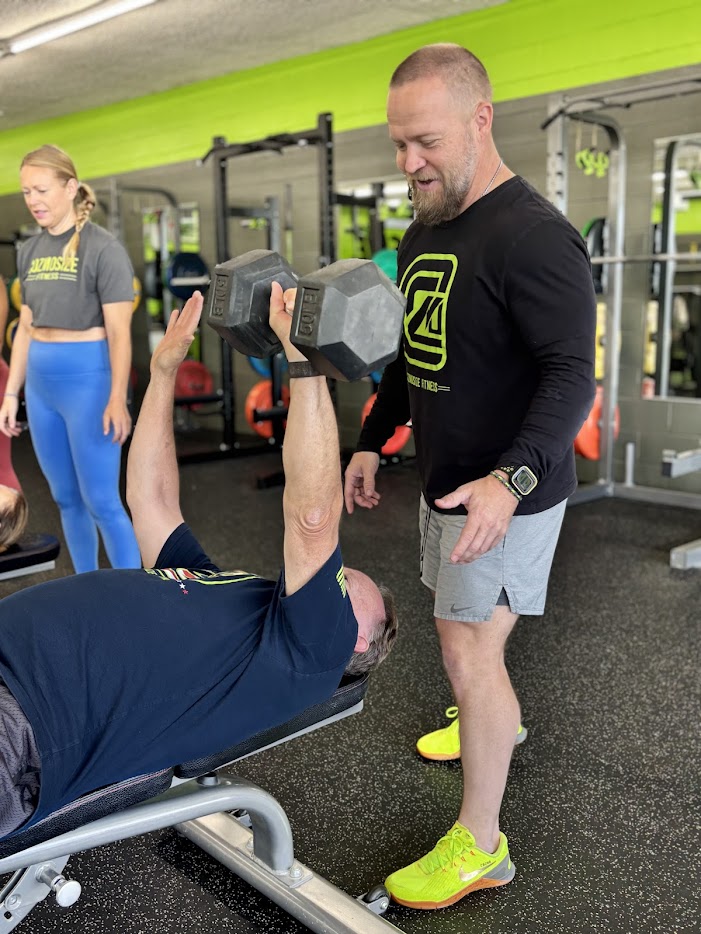
At CozmoSize Fitness in Santa Clarita, our Longevity Strength System (LSS) emphasizes structured, progressive, individualized resistance training.
Our approach incorporates movement assessments, individualized exercise selection, appropriate loading, recorded training performance, and planned progression.
We're not simply trying to make people tired.
We're giving their bodies a reason to become stronger.
Protein helps support the adaptations we're training to achieve.
Training provides the stimulus. Nutrition supports the response. Consistency allows the benefits to accumulate over time.
Frequently Asked Questions About Protein After 40
Do I need more protein after age 40?
Not everyone needs the same amount, but many adults who regularly strength train may benefit from higher protein intake than the traditional minimum recommendation, particularly when focused on preserving muscle during aging or weight loss.
Why does CozmoSize recommend 1 gram of protein per pound?
We use it as a simple, aspirational coaching goal for suitable members. It's easy to remember and encourages people to prioritize protein. However, it's not a scientific minimum, and many people can make meaningful progress at lower intakes.
What if I don't hit my protein goal every day?
That's okay. One day below your target doesn't erase your progress. Focus on maintaining consistent habits and improving your overall nutrition over time.
How much protein should a woman over 50 eat?
Protein requirements depend on body size, health, activity, and goals. For healthy women who strength train, approximately 0.6–0.9 grams per pound can be a useful reference range. Individualized targets may differ.
Can you build muscle after 60?
Yes. Older adults can improve muscle strength and often muscle size through progressive resistance training, sufficient protein, and appropriate recovery.
Is 100 grams of protein a day enough?
It depends. For some people, 100 grams is appropriate. For others, particularly larger individuals who train regularly, a higher intake may be beneficial.
Should I eat protein before or after training?
Both can help you meet your protein needs. For most people, consistently consuming an adequate amount throughout the day matters more than hitting a narrow post-workout window.
Can eating too much protein damage your kidneys?
Higher protein intake is generally tolerated by many healthy adults, but people with chronic kidney disease or other medical conditions may need individualized or restricted protein intake. Always follow appropriate medical advice.
Is protein more important than strength training?
They serve different but complementary roles. Strength training stimulates muscular adaptations, while protein supplies the amino acids that support those adaptations.
The Bottom Line: Aim High, Stay Consistent, and Keep Getting Stronger
Getting older doesn't mean giving up the activities you love.
But maintaining strength, muscle, and independence requires consistent investment in your health.
Protein is one of those investments.
Resistance training is another.
At CozmoSize Fitness, we encourage suitable members to work toward approximately 1 gram of protein per pound of body weight each day.
Not because every gram is mandatory.
And not because anything less means failure.
But because we believe in setting meaningful goals and developing the habits to work toward them.
Some days you'll hit your target.
Some days you won't.
Consistency matters more than perfection.
Combine appropriate nutrition with purposeful resistance training, and you're building a foundation for long-term strength and physical capability.
Because we're not just concerned with what you can lift today.
We're thinking about how you'll move, feel, and function 10, 20, and 30 years from now.
BUILD STRENGTH. MOVE BETTER. LIVE LONGER.
Research & References
- International Society of Sports Nutrition Position Stand: Protein and Exercise (2017)
- PROT-AGE Study Group: Evidence-Based Recommendations for Protein Intake in Older Adults (2013)
- Morton et al.: Protein Supplementation and Resistance Training Meta-Analysis (2018)
This article is intended for general education, not individualized medical or dietary advice. Protein needs vary, particularly for people with certain medical conditions. Consult a qualified healthcare professional or registered dietitian when individualized nutrition guidance is needed.