GLP-1 · Weight loss · Muscle preservation
GLP-1 Weight Loss: How to Protect Your Muscle While Losing Weight
The short answer
Weight lost on GLP-1 medications such as semaglutide (Ozempic, Wegovy) or tirzepatide (Zepbound, Mounjaro) includes some lean mass as well as fat; in the SURMOUNT-1 tirzepatide trial about a quarter of the weight lost was lean mass. The best ways to protect muscle are progressive strength training at least twice a week, enough protein, and tracking body composition and strength, not just scale weight.
Key takeaways
- ■Any large weight loss, with or without medication, can include lean mass.
- ■Lean mass is not the same as muscle: it also includes water and organs.
- ■Strength training gives muscle a reason to stay; protein supplies what it needs.
- ■Track body composition (such as InBody) and strength alongside the scale.
GLP-1 medications have changed the conversation around weight loss. Medications such as semaglutide (Wegovy and Ozempic) and tirzepatide (Zepbound and Mounjaro) can help people achieve substantial weight reductions.
But there's an important question that deserves more attention:
When you're losing weight, what exactly are you losing?
Because losing weight and losing body fat aren't necessarily the same thing.
During significant weight loss, the body commonly loses both fat mass and lean mass. Without appropriate training and nutrition, that can include a reduction in skeletal muscle.
The goal shouldn't simply be to weigh less. It should be to improve body composition while maintaining as much strength, muscle, and physical function as possible.
That's where resistance training becomes particularly important.
Do GLP-1 Medications Cause Muscle Loss?
GLP-1-based medications can be associated with reductions in lean mass during weight loss. However, these medications are not unique in that respect.
Significant weight loss achieved through dietary changes alone can also lead to reductions in lean mass.
A 2025 body composition analysis of the SURMOUNT-1 tirzepatide trial found that approximately 75% of weight lost was fat mass and 25% was lean mass in the studied participants.
A 2026 systematic review examining incretin-based medications and lifestyle interventions similarly found that lean mass accounted for a meaningful portion of total weight lost.
There's an important distinction here: Lean mass is not exactly the same as skeletal muscle.
Lean mass measurements include water, organs, and other nonfat tissues. Consequently, a reduction in lean mass does not mean that every pound lost represents muscle tissue.
Nevertheless, the findings reinforce why maintaining muscle during substantial weight loss deserves attention.
Why Muscle Preservation Matters, Especially After 40
Skeletal muscle does much more than help you lift weights or change your appearance.
Muscle contributes to several important aspects of long-term health:
Metabolic Health: Skeletal muscle plays a major role in glucose uptake, insulin sensitivity, and overall metabolic function.
Strength and Physical Capacity: Muscle helps you climb stairs, carry groceries, get up from the floor, and participate in recreational activities.
Joint Support: Strong muscles help support your joints and improve your ability to control everyday movement.
Bone Health: Resistance training provides mechanical loading that can help maintain bone strength.
Long-Term Independence: Maintaining muscle, strength, and power can support your ability to remain physically capable as you age.
This becomes increasingly important after 40 because age-related changes in muscle mass and strength may already be underway.
While GLP-1 medications may help someone lose weight, maintaining their physical capabilities should remain part of the overall plan.
Three Ways to Help Preserve Muscle During GLP-1 Weight Loss
1. Make Resistance Training a Priority
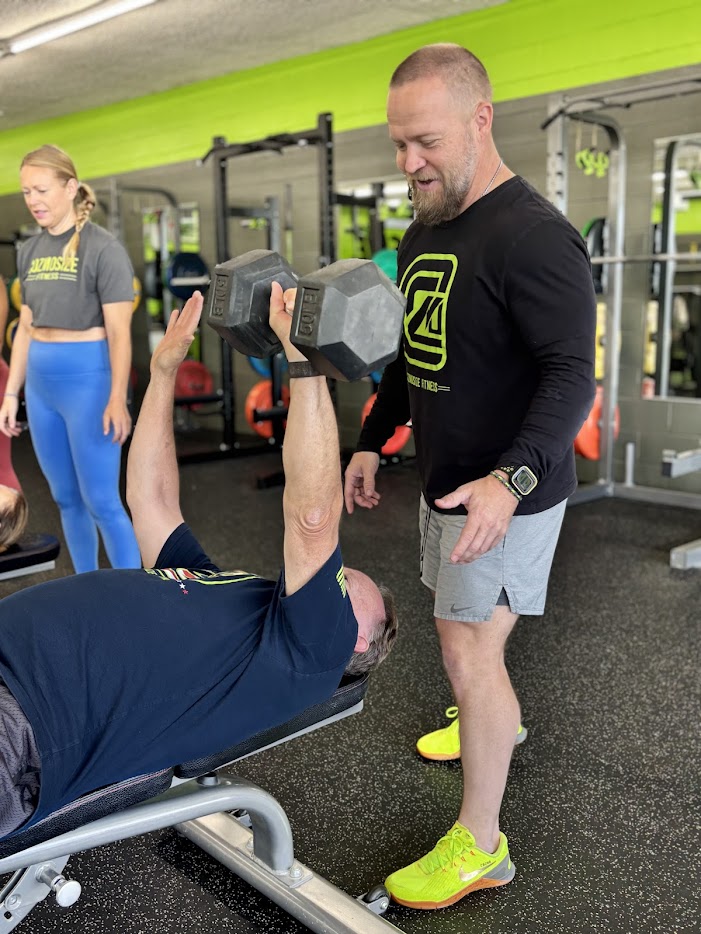
If you're taking a GLP-1 medication, resistance training deserves an important place in your routine.
The goal is to provide your muscles with a reason to remain strong while your body weight decreases.
Effective resistance training includes movements that challenge major muscle groups, appropriate exercise selection, progressive loading, and sufficient recovery.
The CDC recommends muscle-strengthening activity involving all major muscle groups at least twice per week.
For many adults, a structured and individualized strength-training program can provide an effective starting point.
The important distinction is that simply exercising isn't necessarily the same as following a progressive strength-training plan.
Your program should account for where you're starting, what movements you're capable of performing, and how your strength changes over time.
2. Prioritize Adequate Protein Intake
GLP-1 medications frequently reduce appetite. While that can support weight loss, it may also make eating sufficient protein more challenging.
Protein provides the amino acids needed to maintain and repair muscle tissue.
A 2025 joint advisory from leading nutrition, lifestyle medicine, and obesity organizations discussed protein intakes around 1.2–1.6 grams per kilogram per day during active weight reduction, with individual needs varying.
These figures are not universal prescriptions. Protein targets may need adjustment based on body composition, health conditions, activity levels, and medical guidance.
For individuals taking GLP-1 medications, coordinating nutrition with a registered dietitian or prescribing clinician can help ensure adequate protein and overall nutrient intake.
Resistance training and adequate protein work together. Neither should be overlooked.
3. Monitor More Than the Number on the Scale
A bathroom scale tells you how much you weigh.
It doesn't tell you how much of that change came from fat, lean tissue, or fluctuations in body water.
That's why tracking body composition and physical performance can add useful context.
At CozmoSize Fitness, we use InBody assessments as one tool for monitoring changes in body composition over time.
These assessments can provide estimates of fat mass and lean mass, although results can be influenced by hydration and other testing conditions.
We also believe it's important to track what you can actually do.
Are you maintaining your strength? Are your movements becoming more efficient? Are you continuing to progress—or is your performance declining?
Body composition tells part of the story. Strength and function help tell the rest.
Why Structured Strength Training Matters More Than Random Workouts
There's a difference between completing a workout and following a training program.
A workout describes what you did today.
A training program considers what you've done previously, where you are now, and where you're trying to go.
At CozmoSize Fitness, our Longevity Strength System is built around structured, progressive, individualized strength training.
We focus on several essential principles:
- Movement Assessment: Understanding how someone moves before determining the most appropriate exercises.
- Individualized Exercise Selection: Adjusting movements, support, and resistance to match the individual.
- Progressive Training: Applying an organized approach to building and maintaining strength.
- Recorded Performance: Tracking exercises and prescribed loads to make informed adjustments over time.
- Long-Term Consistency: Developing a training routine that supports progress beyond the initial weight-loss phase.
For someone taking a GLP-1 medication, this approach can be especially valuable.
Reduced appetite, changes in energy, and substantial changes in body weight may influence training readiness.
That doesn't mean abandoning strength training. It means having a coach who understands how to adjust the program appropriately.
Can You Build Muscle While Taking a GLP-1 Medication?
Yes, gaining muscle while using a GLP-1 medication is possible, but individual results vary.
Factors include training experience, nutrition, the degree of calorie restriction, age, recovery, and existing muscle mass.
Someone beginning resistance training may respond differently from an experienced lifter.
And although building muscle during significant weight loss can be challenging, improving or maintaining strength remains an important objective.
The goal is to provide the appropriate training stimulus, support it with adequate nutrition, and monitor progress over time.
Frequently Asked Questions
Should I lift weights while taking Ozempic or Wegovy?
Resistance training is generally recommended as part of comprehensive weight management. It can help preserve muscle and support strength and physical function during weight loss. Consult your healthcare professional about any individual medical limitations.
How often should I strength train while using a GLP-1?
General adult recommendations call for strength training at least twice weekly. The appropriate frequency depends on your experience, physical capabilities, recovery, and overall training plan.
Does losing weight mean I'm losing muscle?
Not necessarily. Weight loss can involve fat, lean tissue, and changes in body water. Changes in scale weight alone cannot determine how much muscle you've lost.
Can protein prevent muscle loss?
Adequate protein supports muscle maintenance, particularly when combined with resistance training. However, protein alone cannot guarantee that no muscle or lean mass will be lost during weight reduction.
Is personal training helpful for adults over 40 taking GLP-1 medications?
Individualized coaching can help people select suitable exercises, establish appropriate resistance levels, monitor performance, and make adjustments as their capabilities and body weight change.
The Bottom Line: Don't Just Lose Weight. Build a Stronger Future.
GLP-1 medications can be useful tools for weight management when appropriately prescribed and monitored.
But weight loss shouldn't be the only measure of success.
Maintaining muscle, developing strength, and preserving physical capacity are important parts of long-term health—particularly as we get older.
At CozmoSize Fitness, we don't simply want you to become lighter.
We want you to become stronger, move better, and remain capable of doing the things you love for years to come.
Research & References
- Body composition changes during weight reduction with tirzepatide in the SURMOUNT-1 study (2025)
- Lean Mass Changes With Incretin Therapy Versus Lifestyle Intervention — Systematic Review and Meta-Analysis (2026)
- Nutritional Priorities to Support GLP-1 Therapy for Obesity — Joint Advisory (2025)
- CDC — Adult Physical Activity Guidelines
- Standards of Care in Overweight and Obesity — Pharmacologic Treatment (2026)
Educational information only. CozmoSize Fitness provides exercise coaching, not medical diagnosis, medication management, or individualized medical nutrition therapy. Consult your healthcare provider regarding GLP-1 medications and medical concerns.