Personal training · Program design · Exercise prescription
Same Movement. Different Exercise. What Individualized Strength Training Really Means
The short answer
Individualized strength training means adjusting the exercise, weight, support, range of motion, sets and reps, and training frequency to each person, while everyone follows the same structured program. Two people can train the same movement pattern, such as a squat, with different exercises (a TRX-supported squat and a barbell front squat) and both get stronger.
Key takeaways
- ■The movement category gives structure; the exercise prescription makes it personal.
- ■Assisted or supported exercises are tools, not a sign of failure.
- ■Progress can mean better control, more range of motion or less assistance, not just more weight.
- ■Age alone shouldn't decide someone's program; current ability does.
Two people can train the exact same movement pattern while performing completely different exercises.
And both can get stronger.
This is one of the most important concepts behind individualized strength training.
People often assume that a personalized training program means every person needs an entirely different workout.
But that isn't necessarily true.
At CozmoSize Fitness, we believe effective personal training begins with understanding the individual, identifying the movement patterns they need to train, and prescribing exercises that match their current capabilities.
The movement category provides the structure. The exercise prescription makes it personal.
That's a fundamental principle of our Longevity Strength System (LSS).
What Is Individualized Strength Training?
Individualized strength training is an approach to resistance training in which exercises, loading, training volume, frequency, and progression are adjusted to suit a person's capabilities, experience, goals, and schedule.
Rather than expecting everyone to perform identical exercises, a coach makes informed decisions about how each individual should train.
Those decisions can involve:
- Exercise selection and variation
- Load amount and placement
- External support or assistance
- Range of motion
- Sets and repetitions
- Training frequency
- Movement speed and control
- Progression over time
Importantly, individualized training doesn't mean everything needs to be different.
Two members may share similar training goals and follow the same general training structure, while the specific exercise prescriptions differ.
The purpose is to provide an appropriate training stimulus—not to make every workout unique for the sake of variety.
Same Movement Pattern. Different Exercise.
Let's use a squat as an example.
Imagine two members training at CozmoSize Fitness.
Both are working on a bilateral knee-dominant movement pattern.
Member A is developing squat mechanics, balance, and lower-body strength and benefits from additional support.
Member B has more training experience and is ready to perform a squat variation with substantial external resistance.
Here's how we might approach their training:
| Training Variable | Member A | Member B |
|---|---|---|
| Movement category | Bilateral knee-dominant | Bilateral knee-dominant |
| Exercise | TRX-supported bodyweight squat | Barbell front squat |
| External support | TRX suspension trainer | No external assistance |
| Resistance | Primarily body weight | Appropriately loaded barbell |
| Primary emphasis | Movement control, confidence, foundational strength | Strength development under greater external loading |
| Progression | Reduce assistance, improve control, or introduce resistance | Progress load, repetitions, or other training variables |
Both members are training the squat pattern.
Both are challenging their lower-body muscles.
And both can make progress.
But the physical demands of each exercise are different.
Same movement. Different exercise. Appropriate training for both.
That's individualized prescription.
Why Not Give Everyone the Same Exercise?
Because people differ.
Even individuals of the same age may have very different training histories, physical capabilities, and goals.
One person may have spent decades resistance training.
Another may be returning to the gym after several years.
Someone may have adequate lower-body strength but need more assistance with balance.
Another may perform certain movements comfortably but have limitations that influence exercise selection.
And those differences aren't always obvious from looking at someone.
That's why we don't determine an exercise prescription based solely on age, appearance, or assumptions about fitness level.
Instead, we use information gathered through our Body Mapping process and ongoing coaching observations.
The objective isn't to make someone perform an exercise because everyone else is doing it. It's to select an exercise that serves the intended training purpose.
The Variables That Make Strength Training Individualized
Exercise selection is an important piece of the process, but it's not the only one.
Two people can perform the same exercise and still need very different prescriptions.
1. Exercise Selection
The first consideration is choosing an exercise appropriate for the individual.
Take a horizontal pushing movement.
One member may perform an elevated push-up.
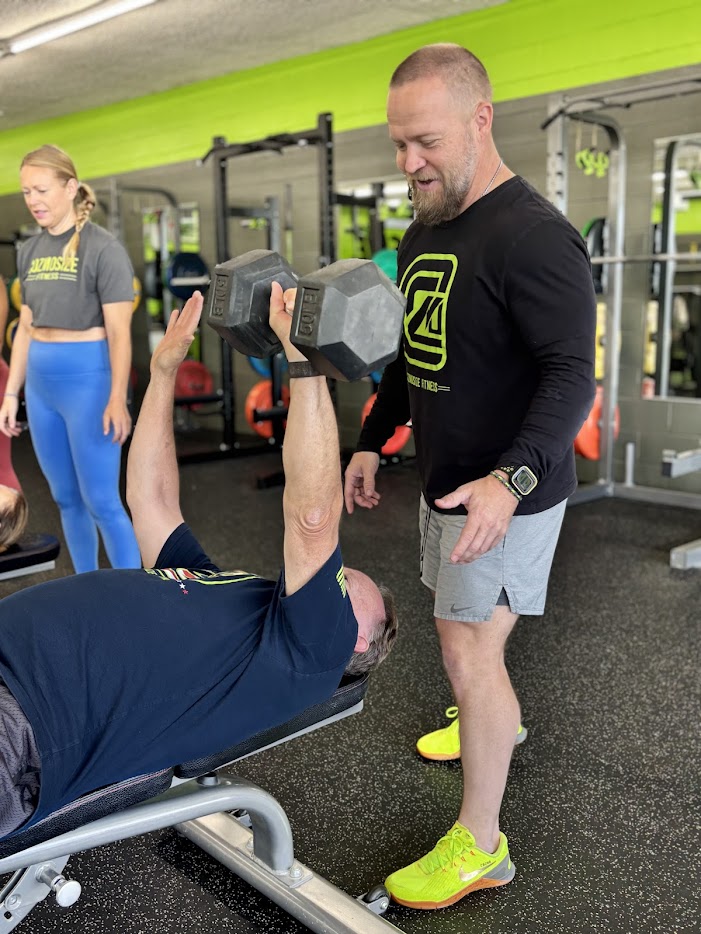
Another may perform a dumbbell bench press.
A third may use a different appropriate pressing variation.
Each exercise can train similar muscles and movement functions, but the demands on strength, stability, equipment, and body positioning can differ.
The appropriate choice depends on the person and the intended outcome.
2. Load Amount
Even when two members perform the same exercise, they shouldn't automatically use the same weight.
At CozmoSize, we prescribe resistance based on the movement, intended training stimulus, and the individual's current capabilities.
For example, two members performing dumbbell Romanian deadlifts may use very different loads.
That doesn't mean one is training correctly and the other isn't.
It means each person is being challenged at an appropriate level.
The right weight isn't necessarily the heaviest weight someone can lift. It's the weight that helps accomplish the intended goal of the exercise.
3. Load Placement
Where resistance is positioned can change how an exercise feels and which physical demands become more prominent.
Consider a squat.
A goblet squat holds the resistance in front of the body.
A front squat positions the barbell across the front of the shoulders.
A back squat places the load across the upper back.
While all are squat variations, differences in load placement can change balance demands, torso positioning, and how the load is distributed through the body.
This gives coaches options when selecting an exercise that fits the individual.
4. External Support
Sometimes adding support makes an exercise more productive.
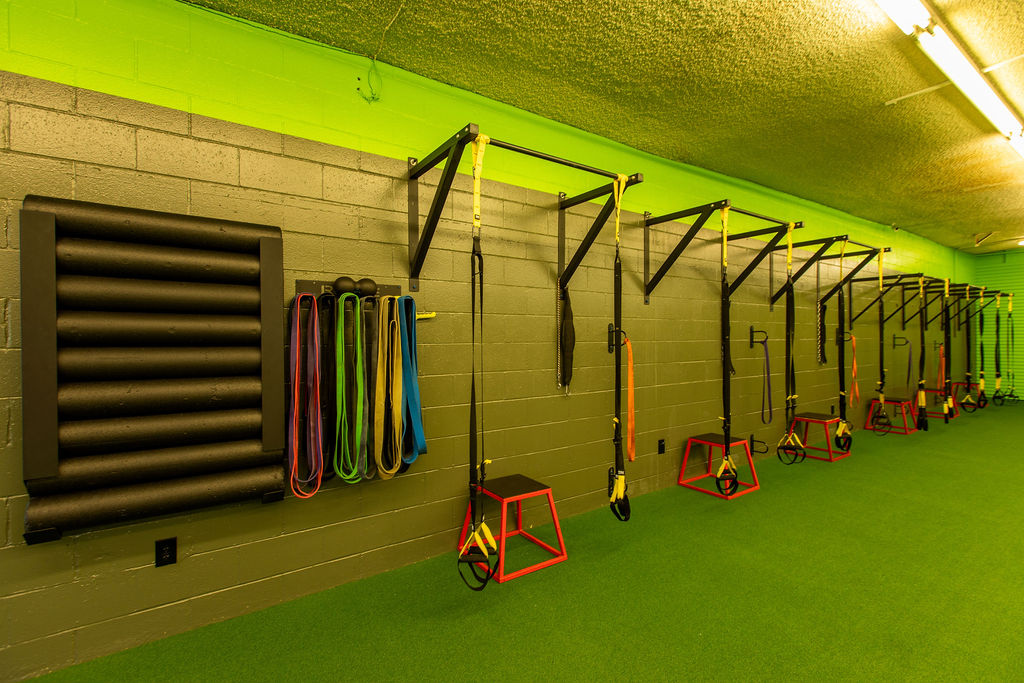
A TRX-supported bodyweight squat, for example, allows a member to use the suspension straps for assistance while developing movement control and lower-body strength.
Support can help a person focus on the intended movement pattern without balance being the primary limiting factor.
As their capabilities improve, support may be reduced when appropriate.
Assistance isn't a sign of failure. It's another tool for creating the right training stimulus.
5. Range of Motion
Not everyone has the same available range of motion, and different exercises create different movement demands.
Depending on the individual, we may adjust how far someone moves while maintaining an appropriate training stimulus.
The goal is to select a range that the member can perform with control and gradually develop their capabilities when appropriate.
We don't automatically assume everyone needs the same depth, position, or variation.
6. Training Volume
Exercise prescription also includes determining how much work someone performs.
Sets and repetitions influence the total training volume and the stimulus being applied.
A member beginning resistance training may require a different workload from someone with years of experience.
Likewise, training volume may be adjusted based on the member's current readiness, recovery, and overall programming.
Individualization isn't just about which exercise someone performs. It's also about how that exercise is prescribed.
7. Training Frequency
Individualized training also means accounting for how often someone can realistically train.
At CozmoSize Fitness, we aim to cover all essential movement patterns, both bilaterally and unilaterally, regardless of whether a member trains two or four days per week.
However, the exercise distribution and training volume will look different.
Someone attending twice weekly may have more movements to complete in each session, while someone attending four times weekly can spread those movements across more sessions.
The goal is the same: complete movement coverage, appropriate training volume, and consistent progression—all structured around the individual's schedule.
Progression Doesn't Always Mean Adding More Weight
When people think about getting stronger, they usually think about lifting heavier weights.
And increasing resistance is certainly an important way to progress.
But it isn't the only one.
Progression may also involve:
- Performing an exercise with improved control
- Using a greater appropriate range of motion
- Reducing external assistance
- Progressing to a more demanding exercise variation
- Increasing repetitions or training volume
- Improving movement speed or power when appropriate
- Increasing resistance while maintaining the intended technique
Consider someone who begins with a TRX-supported bodyweight squat.
Initially, they may need considerable assistance.
Over time, they might use less support, improve their movement control, and eventually perform an unsupported squat.
Additional external resistance may become appropriate as their capabilities develop.
That's meaningful progress, even if the number of pounds lifted hasn't increased at every stage.
Progression means increasing the training challenge appropriately over time—not simply making everything heavier.
Does Everyone Need to Perform the Most Advanced Exercise?
Absolutely not.
More complicated doesn't automatically mean more effective.
A barbell exercise isn't inherently superior to a dumbbell variation.
An unsupported movement isn't automatically more productive than a supported one.
And an exercise doesn't become better simply because it looks more challenging.
The best exercise is the one that appropriately trains the intended movement or physical quality for that particular individual.
Sometimes a simple exercise provides exactly the stimulus we want.
Other times, a more demanding variation may be appropriate.
Our responsibility as coaches is to understand the difference.
The goal isn't to graduate everyone to the most advanced-looking exercise. It's to help everyone become stronger and more capable.
Why Individualization Matters for Adults Over 40
As we get older, maintaining muscle, strength, and power becomes increasingly important.
But chronological age alone shouldn't determine someone's training program.
A 65-year-old with years of resistance-training experience may be more capable in certain movements than a much younger beginner.
At the same time, an adult returning after a long break may need a more gradual introduction to training.
Effective programming considers the person's current capabilities, not just their age.
For adults over 40, individualized training can be especially useful when considering:
Muscle Preservation: Selecting appropriate resistance exercises that provide a meaningful stimulus for maintaining or developing muscle.
Strength Development: Establishing suitable loads and progressing them over time.
Joint Comfort and Movement Capabilities: Choosing exercise variations that accommodate individual needs without unnecessarily abandoning important movement categories.
Power Development: Incorporating appropriate movements that help develop the ability to produce force quickly.
Consistency: Creating a training experience that can adapt as capabilities, readiness, and life circumstances change.
These principles support long-term development rather than short-term performance alone.
What Happens When Someone Has an Off Day?
Individualized training doesn't stop once a program has been written.
Some days a member arrives feeling strong, well rested, and ready to train.
Other days they may be tired, stressed, or simply not performing at their usual level.
At CozmoSize, our coaches can adjust the day's prescription when appropriate.
That might involve reducing the load, modifying an exercise, adjusting the training volume, or selecting a variation better suited to the member's readiness.
Those observations and changes can be recorded in the member's training tablet to inform future coaching decisions.
The important thing is that we're still working within a structured training plan.
Adjusting a session doesn't mean abandoning the program. It means adapting the prescription while preserving the overall training objective.
This is one reason why consistent coaching and documented performance matter.
How the Longevity Strength System Makes It Work
At CozmoSize Fitness in Newhall, Santa Clarita, members train within our structured Longevity Strength System.
The LSS uses planned training phases to develop muscle, strength, and physical capacity.
Our approach incorporates:
Periodized Programming: Organized training phases with defined objectives.
Complete Movement Coverage: Training important movement categories bilaterally and unilaterally rather than relying on random exercise selection.
Individualized Prescription: Adjusting exercises, loading, volume, and frequency to suit each member.
Recorded Training Loads: Documenting performance to support informed progression.
This allows us to maintain a shared training structure while delivering individualized coaching.
Two members can train alongside each other during the same session, work on similar movement categories, and still receive prescriptions that reflect their different capabilities.
That's an important distinction between semi-private personal training and a one-size-fits-all group workout.
Everyone follows a system. Not everyone follows the exact same exercise prescription.
Frequently Asked Questions About Individualized Strength Training
What is individualized strength training?
Individualized strength training adjusts exercise selection, loading, volume, frequency, and progression to match a person's current capabilities, experience, schedule, and goals.
Can two people follow the same program and still receive personalized training?
Yes. Two people can follow the same general training structure while performing different exercise variations or using different loads and prescriptions.
What's the difference between an exercise regression and a progression?
A regression is an adjustment that makes an exercise more manageable or accessible for the individual. A progression increases or changes the challenge as their capabilities develop. Neither should be viewed as a judgment of someone's fitness level.
Are supported exercises less effective than unsupported exercises?
Not necessarily. Support can make an exercise more appropriate by reducing balance demands or allowing someone to focus on the intended training stimulus.
Do I have to perform barbell squats or deadlifts to build strength?
No. A variety of resistance-training exercises can help develop strength. The most appropriate choices depend on the intended outcome, current capabilities, and available equipment.
Does training twice a week mean I'll miss important movement patterns?
Not necessarily. A well-structured program can distribute movement patterns and adjust training volume based on the number of sessions a person attends. At CozmoSize, we account for training frequency when designing the exercise prescription.
How do coaches decide when to increase weight?
Coaches can consider previous performance, movement control, prescribed repetitions, perceived difficulty, and the intended training objective. Recording exercise loads makes it easier to evaluate progression over time.
Is individualized training important for people over 40?
Individualization can be valuable at any age. For adults over 40, it helps account for differences in training history, strength, mobility, recovery, and goals.
What's the difference between individualized training and random exercise modifications?
Individualized training uses planned adjustments connected to a defined training objective. Random modifications may change an exercise without considering how that change contributes to longer-term progression.
The Bottom Line: The Training Should Fit the Individual
Individualized strength training doesn't mean everyone needs a completely different program.
And it doesn't mean constantly changing exercises.
It means understanding the purpose of each movement and selecting the appropriate exercise, resistance, support, volume, frequency, and progression for the person performing it.
At CozmoSize Fitness, this philosophy is central to our Longevity Strength System.
We believe training should be challenging, structured, progressive, and adaptable.
Because developing strength isn't about proving that everyone can perform the same exercise.
It's about helping each individual improve their capabilities over time.
SAME MOVEMENT. DIFFERENT EXERCISE.
THE TRAINING SHOULD FIT YOU.
Research & Further Reading
- American College of Sports Medicine — Resistance Training Prescription for Muscle Function, Hypertrophy, and Physical Performance in Healthy Adults (2026)
- American College of Sports Medicine — Progression Models in Resistance Training for Healthy Adults (2009)
- CozmoSize Fitness — Longevity Strength System
This article provides general exercise education and describes the CozmoSize Fitness coaching approach. Exercise selection and progression should account for individual capabilities and relevant medical considerations.