Getting started · Movement assessment · Beginners
Why Your First Weeks of Strength Training Matter: The CozmoSize Body Mapping Process
The short answer
Body Mapping is the first phase for every new CozmoSize Fitness member, usually completed within about two weeks. Coaches assess how you move through the essential movement patterns, plus mobility, core stability and upper- and lower-body power, then use that to choose your starting exercises and weights. It is a training assessment, not a medical screening.
Key takeaways
- ■You don't need to be in shape before you start; Body Mapping meets you where you are.
- ■If an exercise doesn't fit, coaches change the variation, support, range, load or volume.
- ■Starting weights are set from how you move, not your age or appearance.
- ■Experienced lifters go through it too, so programming starts from today, not from assumptions.
Not everyone should perform the same exercises, use the same weights, or progress at the same pace.
Yet that's exactly how many traditional workouts are designed.
A group of people walks into a gym, everyone receives the same workout, and they're expected to make it work regardless of their experience, physical capabilities, training history, or how frequently they can attend.
But here's the question we believe every coach should ask:
Should the person have to adapt to the workout, or should the training be adapted to the person?
At CozmoSize Fitness, we believe the answer is simple.
The training should fit YOU.
That's why every new member begins with our Body Mapping Phase, an important part of our Longevity Strength System (LSS).
Before we focus on how much weight someone can lift or how hard we can push them, we want to understand how they move, what they're capable of, and how we can develop an effective training program around their individual needs.
Because successful strength training doesn't begin with intensity.
It begins with understanding where you're starting.
What Is the CozmoSize Body Mapping Phase?
Our Body Mapping Phase is an introductory period designed to help our coaches evaluate a new member's movement capabilities, physical readiness, training experience, and appropriate starting points.
Our goal is to complete this process within two weeks, although some members may be ready after one week, while others may occasionally need additional time.
The emphasis is on preparing each member to train effectively, not rushing them through a predetermined timeline.
During Body Mapping, we're doing more than simply teaching someone how to use the equipment.
We're observing how they move, evaluating important physical qualities, identifying appropriate exercise variations, and establishing a foundation for their training.
Our evaluation considers several key areas:
- Movement Quality: How someone performs essential movement patterns, including squatting, hinging, pushing, and pulling.
- Mobility: Their ability to actively move through appropriate ranges of motion with control.
- Core Stability: Their ability to control and stabilize the trunk during different movements.
- Upper-Body Power: Their ability to produce force quickly through upper-body movements.
- Lower-Body Power: Their ability to produce and absorb force through lower-body movements.
- Balance and Coordination: How effectively they control their body during different exercises.
- Strength and Load Tolerance: Their current capacity to perform movements against resistance.
- Training Experience and Frequency: Their previous exercise history and how often they can realistically train.
- Individual Goals: What they want to accomplish, whether that's building muscle, increasing strength, improving movement, or maintaining independence.
We're not expecting everyone to demonstrate the same abilities.
We're gathering information that helps us make better decisions about their training.
Body Mapping gives us a starting point based on the individual rather than assumptions about their age, appearance, or experience.
Why Is a Movement Assessment Important Before Strength Training?
Imagine two people joining the same personal training program.
Both are 55 years old.
Both want to become stronger, build muscle, and maintain their independence.
But one has spent years lifting weights, while the other hasn't exercised consistently in more than a decade.
One may be able to train four days per week, while the other can realistically commit to only two.
Should they perform identical exercises, with identical weights, volume, and progression?
Of course not.
Even if two people share similar goals, their physical capabilities, experience, schedules, and recovery needs can be very different.
One person may have excellent lower-body strength but limited shoulder mobility.
Another may have good mobility but need to develop greater core stability.
Someone else may demonstrate adequate strength but lack the ability to produce force quickly.
These differences matter.
A person's age doesn't tell us everything about how they should train. Their movement capabilities, experience, goals, and training frequency all influence the prescription.
An initial assessment provides information to guide those decisions while establishing a reference point for future progress.
Looking Beyond Strength: Mobility, Stability, and Power
Strength is important, but it's only one component of overall physical capability.
Our Body Mapping process considers other qualities that influence how effectively someone moves and performs.
Mobility
Mobility is the ability to actively move a joint through a range of motion with control.
It's different from flexibility, which generally refers to the available range of motion, often assessed passively.
During Body Mapping, we look at how someone moves through relevant ranges of motion and whether their current mobility supports the exercises we're considering.
We can then select appropriate exercise variations and incorporate mobility work where beneficial.
Core Stability
Core stability isn't simply about having strong abdominal muscles.
It involves controlling the trunk and pelvis while the body produces, transfers, or resists force.
That ability is relevant to everything from squatting and lifting to carrying groceries and performing athletic movements.
We evaluate how members control their trunk during appropriate movements and use that information to guide their training.
Upper- and Lower-Body Power
Strength and power are related, but they aren't the same.
Strength is the ability to produce force. Power involves producing force quickly.
Power is important for many everyday activities, particularly those requiring a quick physical response.
Think about catching yourself after losing your balance, quickly stepping onto a curb, or reacting to an unexpected movement.
As we age, muscular power can decline faster than muscle mass and, in some circumstances, faster than maximal strength.
That's why we don't want to overlook power development when evaluating someone's physical capabilities.
During Body Mapping, we assess appropriate upper- and lower-body power movements based on the member's readiness and experience.
These observations help us determine suitable starting points and progression opportunities.
Our goal is to develop more than strength alone. We want to help members maintain the physical qualities that support an active, capable life.
The Essential Human Movement Patterns
Alongside mobility, stability, and power, we evaluate the fundamental movement categories used throughout our Longevity Strength System.
These include:
- Squat: Knee-dominant movements such as sit-to-stands, squats, and split squats.
- Hinge: Hip-dominant movements such as hip hinges and deadlift variations.
- Horizontal Push: Movements such as push-ups and bench presses.
- Horizontal Pull: Rowing movements performed with cables, dumbbells, or suspension equipment.
- Vertical Push: Overhead pressing patterns and appropriate variations.
- Vertical Pull: Pull-ups, assisted pull-ups, and pulldown variations.
We evaluate how members perform these patterns and determine which exercises best match their current capabilities.
Not everyone needs to perform the same version of a movement.
Someone may begin with a supported squat while another performs a loaded variation.
Someone may use an elevated push-up while another performs a traditional push-up.
The movement category remains the same. The exercise prescription changes to fit the individual.
What Happens If Someone Can't Perform a Particular Exercise?
This is one of the most important parts of our philosophy.
If a member struggles with an exercise, we don't automatically eliminate that movement category from their training.
Instead, we determine whether there's a more appropriate way to train it.
Our coaches can modify several variables:
Exercise Selection: Choose a different variation of the same movement pattern.
External Support: Add assistance or equipment when appropriate.
Range of Motion: Adjust how far someone moves based on their current capabilities.
Load Placement: Change where or how resistance is applied.
Resistance: Increase or decrease the weight being lifted.
Training Volume: Modify sets, repetitions, and overall workload.
These adjustments allow us to maintain the purpose of the training while meeting members where they are.
As their capabilities improve, their exercises and loading can progress.
We don't force a member into an exercise simply because it's written on the program.
We find the appropriate exercise for the member.
Does Everyone Follow a Different Training Program?
Not necessarily.
This is where individualized strength training is sometimes misunderstood.
Individualized training doesn't mean every member needs a completely different collection of exercises.
Two people can train the same movement category while performing different exercise variations.
For example, imagine two members training a knee-dominant movement.
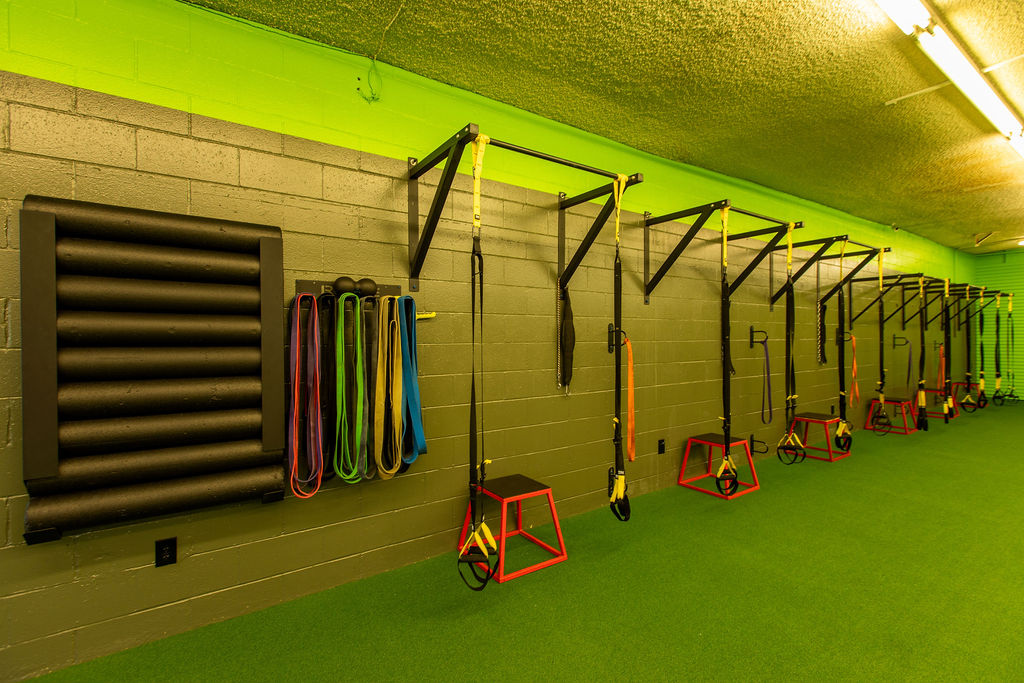
One might perform a supported split squat using TRX suspension trainer.
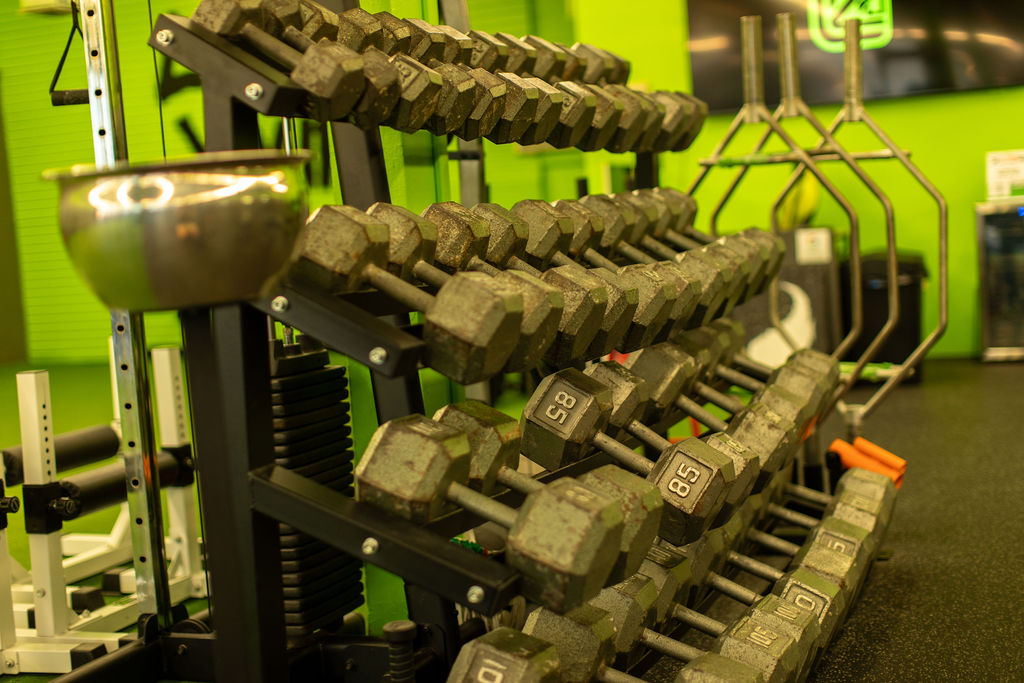
Another might perform a loaded split squat using dumbbells.
Both are training a similar movement pattern, but the exercise selection, support, and resistance reflect their individual abilities.
This allows us to maintain the structure of our Longevity Strength System while individualizing the training experience.
Same movement category. Different exercise prescription.
That's a significant difference between following a structured training system and simply having everyone complete the same workout.
How Do We Determine Starting Weights?
Choosing an appropriate training load is another important part of Body Mapping.
We don't believe someone should automatically lift a certain amount of weight based on their age, appearance, or previous gym experience.
Instead, our coaches consider how the member performs the selected exercise.
We evaluate movement control, exercise familiarity, prescribed repetitions, and the challenge presented by the resistance.
The goal is to identify a starting weight that provides an appropriate training stimulus while allowing the member to perform the exercise effectively.
And that number isn't permanent.
As a member becomes more capable, their prescribed resistance can change.
At CozmoSize, we record training loads and performance to help guide future sessions.
Rather than relying solely on memory or guesswork, we use previous training information to make informed adjustments.
Every weight we prescribe should serve a purpose.
How Long Does the Body Mapping Phase Take?
Our goal is to have each member ready to transition into their ongoing LSS programming within two weeks.
However, the timeline isn't identical for everyone.
Someone with previous strength-training experience who quickly becomes familiar with our movement categories and coaching system may be ready within their first week.
Another member may benefit from additional sessions to become comfortable with certain exercises, develop coordination, or establish appropriate training loads.
Occasionally, the process may extend beyond two weeks when additional familiarization or assessment is beneficial.
The goal is not to make Body Mapping longer than necessary. It's to make sure each member is prepared to train effectively.
We want members to understand their exercises, feel confident navigating the training process, and have appropriate starting prescriptions.
And that takes us back to the reason we perform Body Mapping in the first place.
We meet the individual where they are, rather than expecting everyone to follow the same timeline.
What Happens After Body Mapping?
After the initial Body Mapping Phase, members continue training within our Longevity Strength System.
The LSS uses planned resistance-training phases designed to develop muscle, strength, and physical capacity over time.
Our programming emphasizes:
- Structured, periodized training
- Complete movement coverage
- Individualized exercise prescription
- Appropriate progression
- Recorded training loads and performance
- Adjustments based on individual capabilities and training frequency
The information gathered during Body Mapping helps guide those decisions.
And individualization doesn't stop when Body Mapping ends.
As members improve their mobility, stability, strength, or power, their training can evolve.
If someone misses a session, returns from a break, or simply has an off day, adjustments can be made while preserving the overall direction of their program.
The system provides the structure. The coaching makes it personal.
Is Body Mapping Only for Beginners?
Absolutely not.
Beginners can benefit from establishing appropriate starting points and becoming familiar with essential movement patterns.
But experienced lifters can benefit from individualized assessment as well.
Someone may have years of resistance-training experience but still benefit from evaluating their current mobility, core stability, power, or exercise selection.
Likewise, a person returning after an extended break may not be ready to resume the same weights or exercises they previously used.
Body Mapping isn't about labeling someone as a beginner or advanced.
It's about understanding where they are today.
Is a Movement Assessment a Medical Screening?
No.
Our Body Mapping Phase is a coaching assessment used to help guide exercise selection and training prescription.
It is not a medical diagnosis, a substitute for physical therapy, or a reliable method of predicting future injuries.
If someone has an injury, unexplained pain, or a medical concern requiring evaluation, the appropriate healthcare professional should address it.
Our role is to help people train effectively within their capabilities and professional medical guidance when applicable.
Frequently Asked Questions
How long does the CozmoSize Body Mapping Phase take?
Our goal is to complete Body Mapping within two weeks. Some members may be ready after one week, while others occasionally benefit from additional time. The timeline depends on their experience, movement capabilities, and familiarity with the training system.
What happens during Body Mapping?
Coaches evaluate movement patterns, mobility, core stability, upper- and lower-body power, and other physical capabilities. We also consider training history, realistic attendance frequency, and individual goals to establish appropriate exercise prescriptions.
Do I need to be in shape before starting personal training?
No. Our approach is designed to meet people at their current level of experience and capability. You don't need to reach a particular strength or fitness level before beginning.
What if I can't perform a specific exercise?
Our coaches can select an appropriate variation of the movement category. Depending on the individual, this might involve additional support, adjusted resistance, modified range of motion, or a different exercise.
Is semi-private personal training different from a group fitness class?
Yes. At CozmoSize, our semi-private model combines coached sessions with individualized exercise prescription within a structured training system. Members can train at the same time without being required to perform identical exercises.
Does it matter how many days per week I can train?
Yes. Training frequency helps determine how exercise selection, movement coverage, and training volume should be organized. A well-designed program considers both your goals and the time you can realistically commit.
How do you know when to increase my weights?
Our coaches consider movement quality, previous performance, prescribed repetitions, and how the member responds to training. We record training loads to support informed progression.
Is personalized strength training beneficial for adults over 40?
Yes. Individualized training can account for differences in strength, movement capabilities, training history, recovery, and personal goals. These considerations become particularly valuable when planning for long-term physical function.
Can I start strength training if I haven't exercised in years?
Many previously inactive adults can begin resistance training with appropriate exercise selection and progression. People with relevant medical concerns should seek advice from their healthcare professional when indicated.
The Bottom Line: Your Training Should Fit You
At CozmoSize Fitness, we believe everyone deserves a training program that considers their individual capabilities, goals, experience, and lifestyle.
Not a random collection of exercises.
Not a one-size-fits-all workout.
And certainly not a program that expects everyone to move, lift, and progress identically.
Our Body Mapping Phase helps us establish the foundation for individualized strength training.
By evaluating movement quality, mobility, core stability, strength, power, and training frequency, we can make informed decisions about how each person should begin.
Our goal is to have members ready to transition into their ongoing training within two weeks, while allowing flexibility for individual needs.
From there, our Longevity Strength System provides the structure, progression, and coaching needed to support long-term development.
Because our goal isn't simply to make someone work hard today.
It's to help them build and maintain the strength, muscle, and physical capacity they'll need for years to come.
You shouldn't have to fit yourself into a workout.
THE TRAINING SHOULD FIT YOU.
Research & Further Reading
- American College of Sports Medicine — Progression Models in Resistance Training for Healthy Adults
- CDC — Physical Activity Guidelines for Adults
- CozmoSize Fitness — Longevity Strength System
This article describes CozmoSize Fitness's coaching process and provides general exercise education. Movement assessments are not medical diagnostic tests, and individual training recommendations vary based on health, experience, and physical capabilities.